
Prevention
Why Drone Roof Inspections Beat Ladder Inspections on Tile Roofs
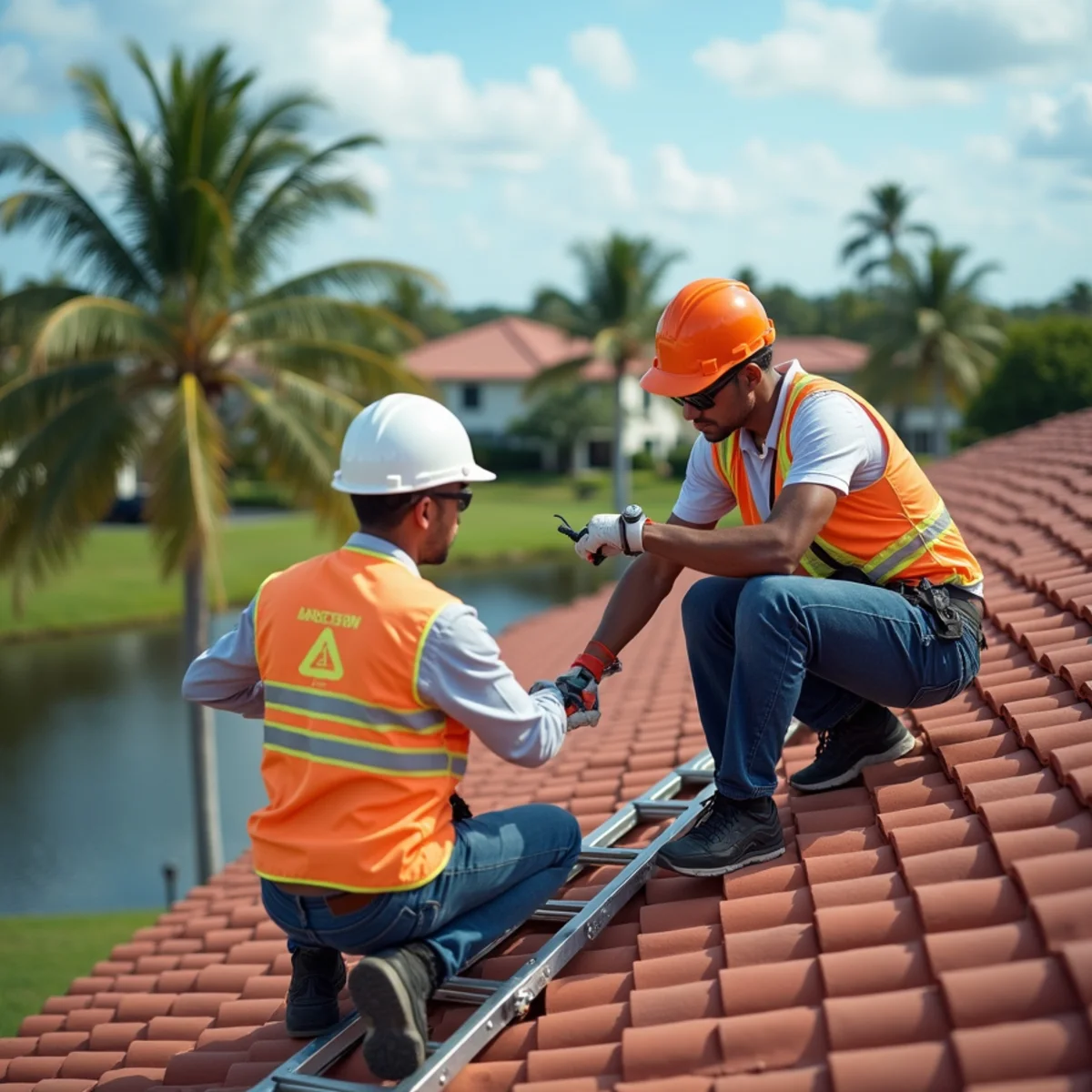
Every footstep on a concrete or clay tile roof risks cracking a tile that was structurally fine. A drone inspection documents the same roof without ever putting weight on it.
Tile is the most common premium roofing material in Palm Beach and Broward Counties, and it's also one of the easiest roof types to accidentally damage during the very inspection meant to check its condition. Concrete and clay tile can crack under concentrated foot pressure, especially at the center of a tile or near a broken lug, and a heavy-footed ladder inspection can leave a roof with new damage that did not exist before the inspector climbed up.
What actually happens when someone walks a tile roof
Tile is designed to shed water and resist wind uplift as an interlocking system, not to bear concentrated point loads from a person's foot. Stepping in the wrong spot, particularly near the butt end of a tile or over a hollow void beneath it, can crack a tile that was otherwise structurally sound. Multiply that across a full roof walkaround and it's common for a ladder-based inspection to create several new cracked tiles as a side effect of the process meant to assess the roof's condition.
How a drone inspection covers the same ground more safely
- Zero foot traffic on the roof, so the inspection itself cannot crack a tile that was fine before the drone arrived.
- Full-roof photo coverage, including ridges, hips, and valleys that are difficult or dangerous to reach safely on foot, especially on steep pitches.
- Faster turnaround, typically flying an entire residential roof in well under an hour compared to a slower, more cautious manual walkaround.
- A documented photo report you keep on file, useful both for maintenance planning and as dated evidence of roof condition if you ever need to support an insurance claim.
- Better access to steep or high sections of multi-story homes where ladder placement is genuinely hazardous for the inspector.
Where a ladder or foot inspection is still appropriate
Drone inspections are not a replacement for every hands-on task. Repair crews still need to walk sections of a tile roof to actually replace cracked tiles, re-secure flashing, or address a specific leak point, using tile-walking techniques and distributing weight at batten locations to minimize new damage. The difference is intent: a repair crew walks the roof because the work requires it, while a routine inspection does not need anyone on the tile at all.
Our free drone roof inspection documents your entire tile roof with a photo report, no foot traffic required. Call (831) 666-1600 to schedule one.
Documentation quality matters for insurance and HVHZ tile fastening
High-resolution drone photography also does a better job than a ground-level or ladder-based check at documenting the small details that matter for insurance claims and code compliance, cracked or slipped tiles, deteriorating ridge caps, or visible fastener issues near the eave. In Coral Springs and Deerfield Beach, where tile attachment methods fall under HVHZ requirements once you're south of the Hillsboro Canal, a clear photo record of fastening and ridge condition is useful both for maintenance planning and for demonstrating a roof's condition at a point in time. Our HVHZ roofing guide covers what changes for tile attachment once you cross into Broward.
What a drone inspection report actually shows you
| Roof detail | Why drone imaging captures it better |
|---|---|
| Ridge and hip tile condition | Steep, hard-to-reach angles are photographed safely from multiple sides |
| Cracked or slipped tiles | High-resolution imagery spots hairline cracks that are hard to see from a ladder |
| Valley debris and flashing wear | Aerial angle shows accumulation that's invisible from the ground |
| Overall roof plane condition | Full coverage in minutes versus a slower, section-by-section walkaround |
What a licensed roofer looks for in drone imagery that a homeowner might miss
Trained eyes catch subtler signals than an obvious crack or a missing tile. A slight color variation across an otherwise uniform field of tile can indicate the exposed underside of a cracked tile catching light differently than the weathered top surface around it. Shadow patterns along a ridge or hip line, small breaks in an otherwise even shadow, often reveal a lifted or shifted tile before it is visible as an outright gap. Staining patterns concentrated near a valley usually point to debris accumulation or a developing flashing issue rather than a cosmetic mark, which is worth flagging even when nothing looks obviously broken.
Once drone photos flag a specific area, a repair crew walks only that section, using the same batten-based foot placement discussed above, rather than covering the whole roof on foot. For a tile roof with damage concentrated in one or two areas, this keeps the repair targeted; if the imagery shows damage spread broadly across multiple planes, that pattern is itself useful information pointing toward a fuller assessment rather than a series of isolated patches.
Drone imagery has a real limitation worth being upfront about: it documents visible surface condition well but cannot verify fastening strength or adhesion under a tile that looks fine from above. When photos suggest a widespread attachment issue rather than isolated cracked tiles, that still calls for a hands-on assessment of a representative sample area, not a decision made from photos alone.
We recommend a full drone inspection at least once a year on any tile roof, plus one more after any storm strong enough to be locally notable, even if nothing looks obviously wrong from the ground. Small changes, a shifted tile here, a hairline crack there, are far easier and cheaper to address individually than to discover all at once during a much larger problem years later.
If your tile roof has not been inspected in the last year, or if you're heading into hurricane season and want a documented baseline, a drone inspection gives you a clearer picture with less risk to the roof than the traditional alternative. It's a small change in method that avoids creating the very damage the inspection is meant to catch.
Frequently asked questions
Talk to a licensed Boca Raton roofer
Get a free drone inspection and a written estimate from Boca Raton's trusted, licensed roofing team. Same-day response, no pressure.
Keep reading
Wind Mitigation Inspections: The Roof Features That Lower Florida Insurance Premiums
A wind mitigation inspection scores specific, verifiable roof features — not the roof's age or looks. Here's exactly what the inspector checks and why each feature matters to your premium.

Pre-Hurricane Season Roof Checklist for Palm Beach County Homeowners
Hurricane season starts June 1 whether your roof is ready or not. Work through this checklist in May to catch small issues before wind and rain turn them into claims.