
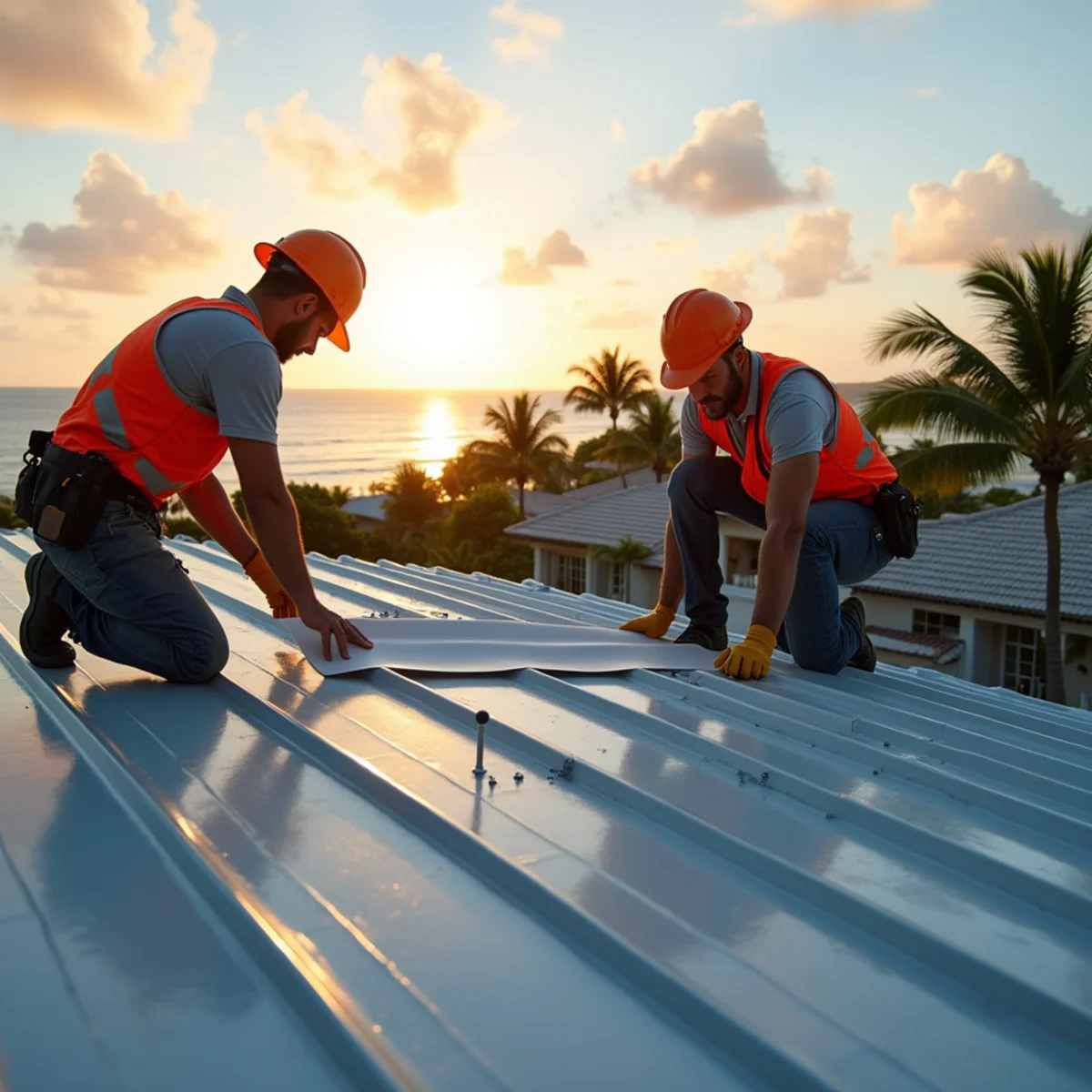
East of Federal Highway, and anywhere near the ocean or the Intracoastal, salt air is the quiet force that ages a roof faster than the sun or the rain. Airborne chloride corrodes steel fasteners, eats galvanized flashing, and streaks and pits ordinary metal long before the covering itself wears out. Coastal roofing is about matching every component to that environment, so the roof reaches its full life instead of failing at the fasteners a decade early.
As a Florida state-certified, insured roofing contractor on N Federal Highway, we roof the barrier-island and waterfront homes from Boca's beachside neighborhoods out to the Intracoastal, where the wrong nail or the wrong flashing is a callback waiting to happen. We specify stainless steel fasteners, aluminum and other non-ferrous flashing, and marine-grade metal finishes, then detail the roof for both salt and the roughly 170 mph design winds this coast sees. Call (831) 666-1600 for a coastal assessment.
Signs you need coastal roofing in Boca Raton
Rusting fasteners bleeding through the roof
Standard electro-galvanized nails and screws corrode in salt air, streaking the roof with rust and losing their grip. Once fasteners fail, tiles slip and panels loosen even though the covering looks fine.
Corroded flashing at the most vulnerable joints
Valleys, headwalls, and penetrations are where roofs leak first, and galvanized steel flashing near the coast rusts through exactly there. Non-ferrous flashing keeps those joints watertight for the life of the roof.
Cheap metal that pits and streaks
Not all metal roofing is coastal-grade. Bare or lightly coated steel near the ocean pits, chalks, and stains within a few years, while the right alloy and finish hold their look and integrity.
Wind and salt working together
Oceanfront and Intracoastal roofs face direct, unobstructed wind on top of the salt load. A coastal roof has to be detailed for uplift and corrosion at the same time, not one or the other.
Our process
- 1
Coastal assessment and free drone report
We fly the roof and inspect the fasteners, flashing, and covering for the specific corrosion patterns salt air produces, then document what is failing and why.
- 2
Material specification for the environment
We spec stainless steel fasteners, aluminum or other non-ferrous flashing, and a coastal-rated covering, then match everything so no dissimilar metals sit together and accelerate corrosion.
- 3
Tear-off and dry-in
We strip to the deck, re-nail sheathing to code, and install a self-adhered underlayment that doubles as a secondary water barrier against wind-driven rain.
- 4
Corrosion-resistant install
We install the covering with non-corroding fasteners and detail every flashing, valley, and penetration in materials chosen to survive the salt.
- 5
Final inspection and maintenance plan
We schedule the municipal final, hand over warranties and wind-mitigation documents, and set you up with a Mighty Watchdog check-in schedule suited to a coastal roof.
Why standard materials fail near the water
Salt air is relentless in a way inland roofs never experience. Airborne chloride settles on the roof, holds moisture against metal, and drives galvanic and pitting corrosion. Electro-galvanized nails, standard screws, and galvanized steel flashing simply were not made for it; they rust, stain the roof, and lose their hold years before the tile or membrane above them wears out. The fix is to remove ferrous metal from the equation wherever it touches the weather: stainless steel fasteners, aluminum and other non-ferrous flashing, and coverings chosen for coastal service.
Metal is often the smartest coastal covering when the right alloy and finish are used, but it has to be specified carefully. We compare the trade-offs in our post on tile vs. metal roofing for Boca Raton homes, which weighs wind, salt air, and lifespan side by side.
Choosing tile or metal for a coastal home
Both tile and metal can perform beautifully at the coast when the hidden components are right. Concrete and clay tile shrug off salt on the surface, but the fasteners, battens, and flashing beneath them must be corrosion-resistant or the roof fails from within. Coastal-grade standing seam and 5V metal handle salt and wind well and can carry a 40-plus year life, provided the alloy, coating, and fasteners are matched to a marine environment. We help you weigh appearance, budget, and exposure and give an honest recommendation for your specific home.
For oceanfront properties in Highland Beach and Hillsboro Beach and the rest of this stretch of coast, our field guide on re-roofing an oceanfront home in salt air details the exact materials we reach for and why.
Coastal roofs still have to beat the wind and the code
Corrosion is only half the coastal challenge. Barrier-island and waterfront homes take direct, unobstructed wind, so the same roof needs the attachment and secondary-water-barrier details covered on our wind mitigation page. And location on the map changes the rulebook: homes south of the Hillsboro Canal in Broward sit in the High-Velocity Hurricane Zone and require HVHZ-approved products and Miami-Dade NOA or Florida Product Approval documentation, while Boca and the rest of Palm Beach County follow the Florida Building Code without the HVHZ overlay. Our explainer on HVHZ roofing in Broward County covers what changes when you cross that line.
Coastal Roofing across Palm Beach & Broward County
Salt air does its damage along the whole coast, so our coastal work follows the water from Palm Beach County down into Broward. We roof oceanfront and Intracoastal homes in Highland Beach, Gulf Stream, Ocean Ridge, and Manalapan, then south along the barrier-island stretch through Hillsboro Beach and Lauderdale-by-the-Sea. The closer the home sits to the water, the more aggressive the corrosion detailing we specify.
Where the coast crosses a county line, the rulebook changes with it. Oceanfront homes in Highland Beach, Gulf Stream, and the rest of Palm Beach County build to the Florida Building Code and Florida Product Approval. Cross south of the Hillsboro Canal into Deerfield Beach and Hillsboro Beach, and you are in Broward's High-Velocity Hurricane Zone, where HVHZ-approved products and Miami-Dade NOA documentation apply. We detail every coastal roof for salt and roughly 170 mph design winds, then match the paperwork to the side of the line the home sits on.
What affects your price
Coastal roofs are priced from a written scope after we see the exposure, covering, and access, but planning ranges help you budget for the corrosion-resistant materials the environment requires.
- Covering and alloy
- Coastal-grade metal (standing seam or 5V) commonly runs $8-$20 per sq ft installed; tile runs $9-$25. The right alloy and finish cost more up front and last far longer at the water.
- Fasteners and flashing
- Stainless fasteners and non-ferrous flashing add material cost over standard components, but they are the difference between a roof that lasts and one that fails early.
- Exposure
- Direct oceanfront homes need more aggressive corrosion detailing than homes a few blocks inland or along the Intracoastal.
- Wind detailing
- Enhanced fastening, sealed decks, and edge-metal details for high uplift add labor on exposed coastal roofs.
- Access and staging
- Narrow barrier-island lots and beachfront setbacks can complicate staging, material handling, and protection.
These are honest planning ranges, not a quote. Your written scope confirms the real price after a free inspection. Call (831) 666-1600.
Why choose Mighty Dog Roofing for coastal roofing
- Stainless fasteners and non-ferrous flashing specified for salt air, not standard hardware
- Coastal-rated metal alloys and finishes that resist pitting and streaking
- Dissimilar-metal detailing so components do not corrode each other
- Roofs detailed for salt and roughly 170 mph design winds together
- Free drone report that identifies coastal corrosion before it leaks
- Maintenance check-in schedule tuned to an oceanfront environment